What is Dissolution Recycling?
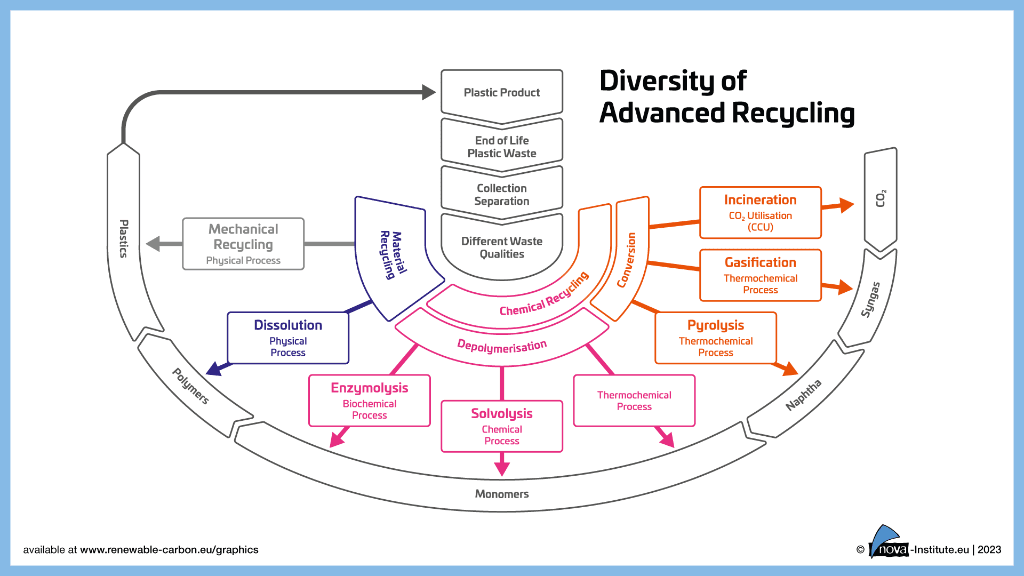
Dissolution recycling is a physical separation process in which polymers are selectively dissolved in a solvent to separate them from additives, pigments, and impurities. Unlike chemical recycling, the polymer chains remain intact.
The Process
In dissolution recycling, the target polymer within a mixed waste stream is selectively dissolved in an appropriate solvent, while insoluble contaminants are separated and removed. The resulting polymer solution is subsequently purified using conventional separation techniques such as filtration, adsorption, or equivalent processes to further eliminate residual impurities. Following purification, the polymer is recovered from the solution, and the solvent is regenerated and reused within the process, enabling efficient material recovery and circular operation.
Key Advantages
- Removes colorants, odors, and additives, delivering high-purity, near-virgin quality recyclates
- Enables recycling of complex, multilayer, and contaminated plastics, unlocking circular value from waste streams that are otherwise non-recyclable
- Preserves polymer chains and material integrity, ensuring high material yield and efficient resource use
- Complements mechanical recycling where it reaches its limits, bridging the gap before depolymerisation and chemical recycling pathways
What It Is NOT
- Not Solvolysis or Depolymerisation: It does not chemically break polymers down into monomers or basic chemical feedstocks.
- Not Mechanical Washing: It goes beyond surface cleaning by removing embedded additives, pigments, and legacy contaminants at the material level.
- Not Chemical Recycling: It does not rely on chemical reactions, high temperatures, or molecular cracking to recover value from plastics.
- Not Downcycling: It does not degrade material quality or limit polymers to low-value applications.